Location: 46 Claremont Ave, New York, NY 10027
Year: 2026
“Excellence in design and advanced sustainability in a building created for and by women, fostering the next generation of leaders.”
As a leader in preparing young women and underrepresented voices for careers in the sciences, Barnard is creating a new collaborative and welcoming space to nurture the next science leaders. The Roy and Diana Vagelos Science Center (RDSC) transforms the former Altschul Hall, bringing a dated structure into a new age of science. This will be one of the first net zero-operational carbon, all-electric academic science buildings.
A 14-story northside addition, coupled with renovations to the existing building, doubles the available space and unites all science-based departments under one roof. Beyond just enhancing research and teaching facilities, the RDSC will serve as a new campus gateway, linking adjacent buildings and offering shared space to engage with the larger campus and community.
The RDSC is a powerful example of a building led and shaped by women, reflecting Barnard’s broader commitment to advancing women from Barnard leadership to architects, engineers, owner’s representatives, and the construction team.
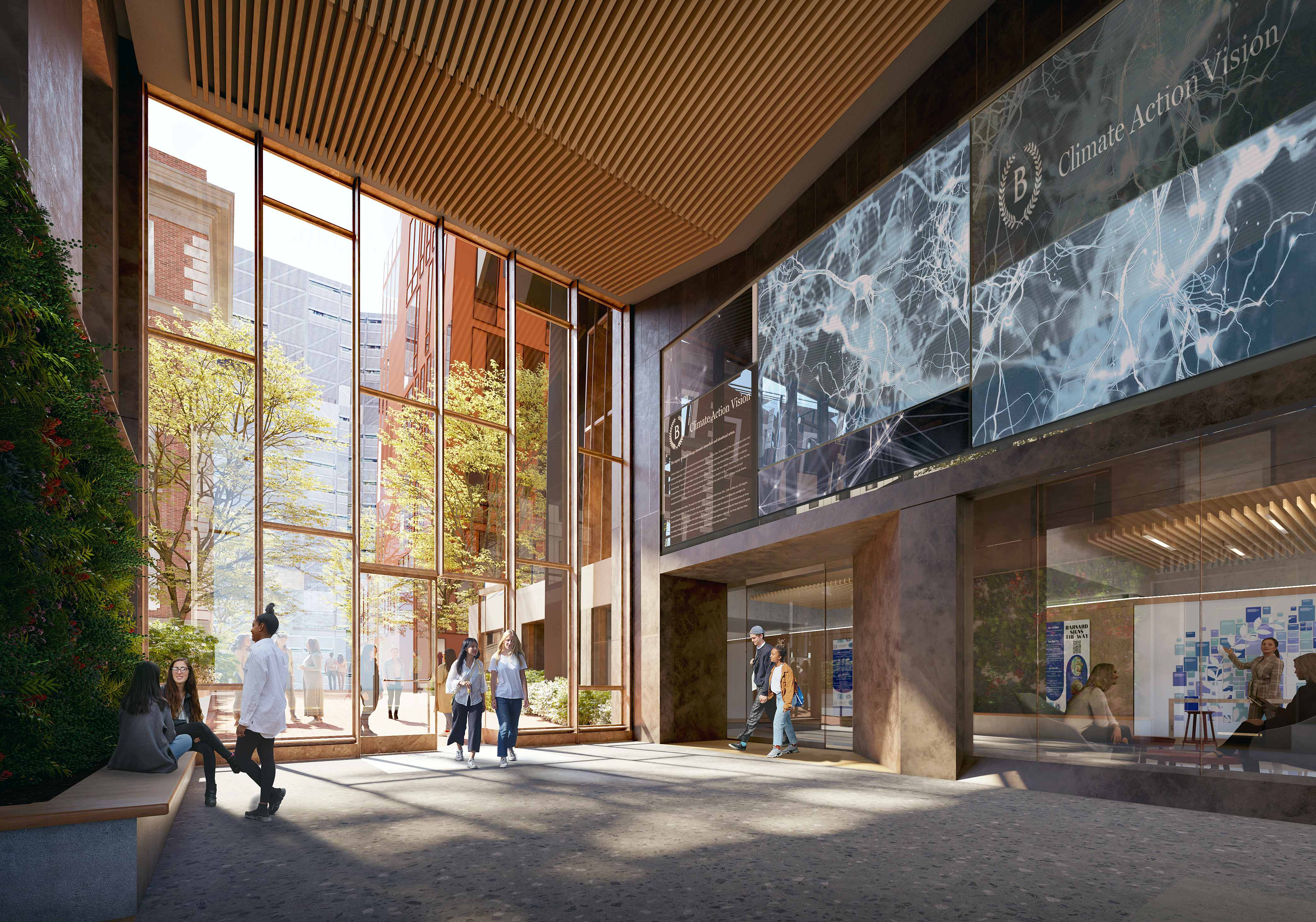
Connectivity is prioritized both functionally and visually throughout the building. A grand two-story gateway creates a prominent front door to the RDSC while allowing students to easily transverse to the neighboring Milstein Center and Milbank Hall. Reskinning of the lower floor exterior facade establishes a once lacking, common and cohesive material language between campus buildings. In support of cutting-edge research and interdisciplinary learning each floor is uniquely designed to support specific departmental needs while promoting synergies that break down disciplinary divides.
Inclusivity and transparency are key drivers of the building’s design. Accessible lower floors are organized to support student collaboration, encourage community interactions, and promote science on display. The first floor will host a community-based classroom and a shared STEM workshop space, and students will have access to a mix of active spaces that encourage multiple scales of learning.