New York City 2026: Selected Projects

The Richard Gilder Center for Science, Education, and Innovation

Studio Gang
Jeanne Gang FAIA • Ana Flor Ortiz • Anu Leinonen • Anika Schwarzwald

Arup
Michelle Roelofs PE

Davis Brody Bond

Reed Hilderbrand
Lydia Gikas Cook

Ralph Appelbaum Associates
Erin Kentch • Judy Vannais

American Museum of Natural History
Rebecca Myers

1 of 1

Location: 415 Columbus Ave, New York, NY 10024
Year: 2023

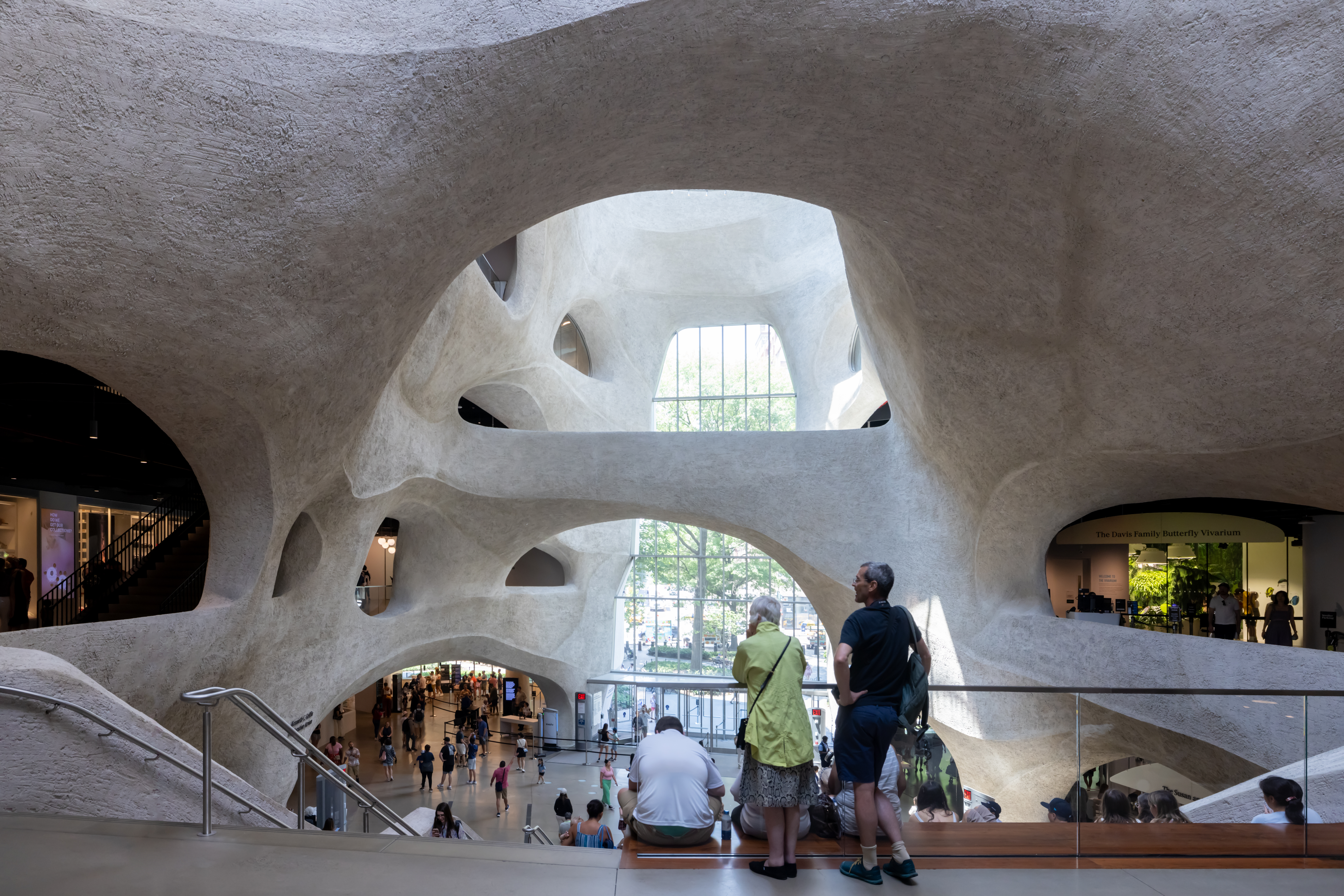
“Already iconic, the team of women involved at every stage has realized a dazzling, imaginative, and family-forward addition.” The Richard Gilder Center for Science, Education, and Innovation is an immersive expansion of the American Museum of Natural History that houses exhibitions, education spaces, a theater, collections spaces, and a library that invites visitors to discover and engage. At a time of urgent need for better public understanding of science and greater access to science education, the Gilder Center is designed to amplify the intellectual impact of the Museum with experiential architecture that encourages exploration—drawing in people of all ages, backgrounds, and abilities to share the excitement of scientific discovery and learning about the natural world. The new entry welcomes visitors into a five-story atrium evoking the shape of a natural canyon, this form is also the load-bearing structure carrying the floors of the building. This project was truly built by women – it had a remarkable amount of women in leadership and key design roles on the owner, architect, engineering, and contractor teams. The architect, Jeanne Gang, led the design of this incredible space and her design team was also predominantly women with the key project leadership roles held by Anu Leinonen, Ana Flor, Anika Schwarzwald, and Bethany Mahre. The structural engineering was led by Michelle Roelofs with key team members Charys Clay and Gabriela Garcia. The owner and owner’s representatives were led by Ann Siegel, Rebecca Myers, Suzanne Musho. The leadership of the MEP team, lighting team, and construction manager teams were also all women. To design the canyon wall Studio Gang and Arup worked closely to align programmatic needs and the structural performance of the wall, shaping the wall create arches that carried the loads to discrete locations at the base. The project leveraged shotcrete, a sprayable concrete more commonly used in infrastructure projects. Arup completed the structural design of the Gilder Center and modelled the shotcrete rebar in 3D using parametric modelling tools. During the construction phase, Arup leveraged these tools to carry out special inspections of the shotcrete reinforcement. Arup and Studio Gang worked with subcontractors to develop several mock ups of the shotcrete construction to learn about placement procedures, rebar requirements, concrete mix variations, finish options, and to confirm feasibility of the material in this application.
View next project→
View all selected projects→